What a DRSKIN fleece lining does in the cold, and what it does not
A brushed inside face holds still air against the skin. That is the mechanism, and it is the whole of what we will claim. What the public guidance on cold work asks for instead, why no garment here carries a temperature rating, and how to build the layers over it.
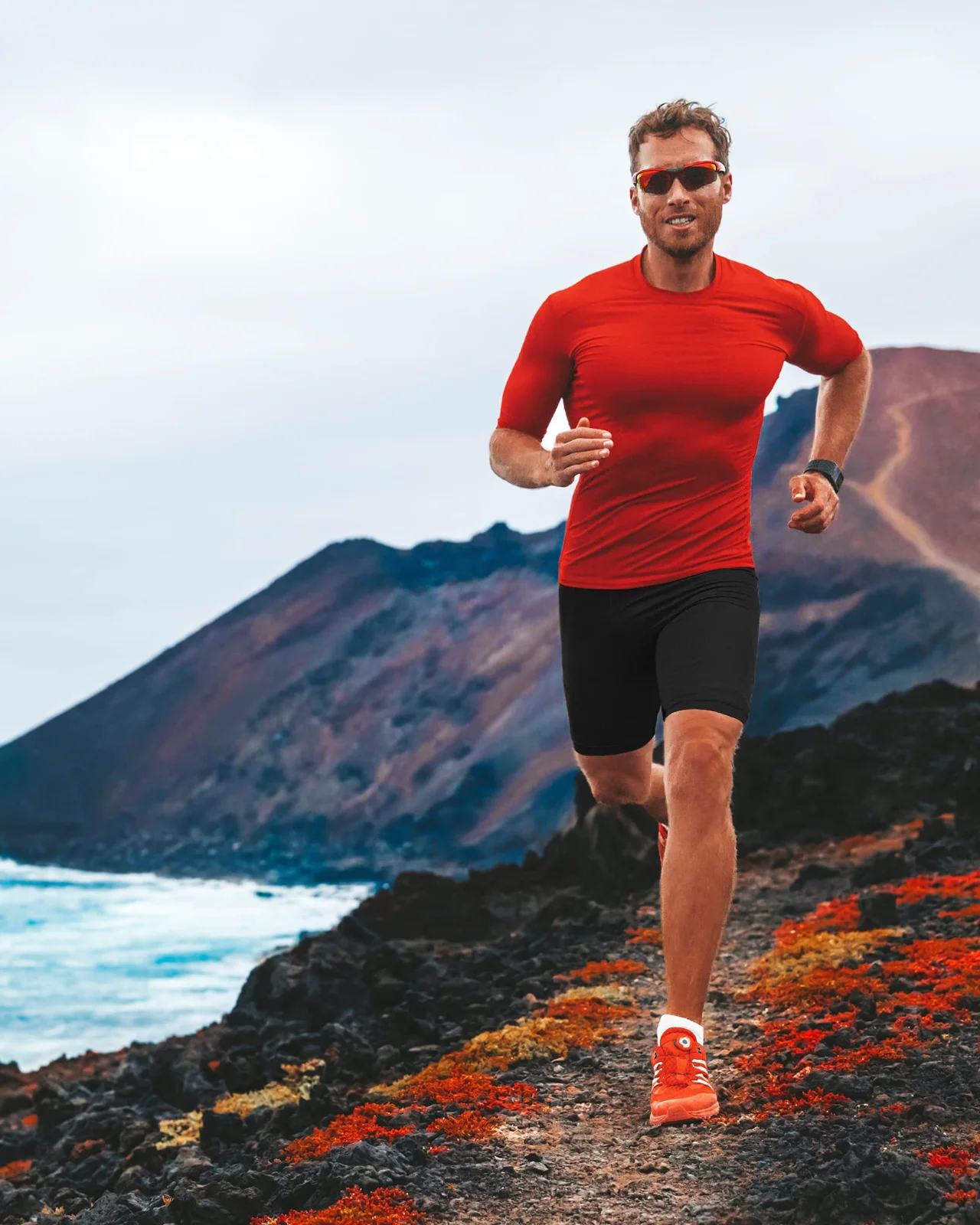
Every winter somebody asks us what temperature the fleece-lined tights are good for. It is a fair question and there is no honest number to give, which is worth explaining properly rather than deflecting.
The mechanism, in one paragraph
Fleece-lined here means the inside face of the knit has been brushed: the loops on that side are raised into a soft nap. The nap does not generate heat. What it does is hold a layer of still air against the skin, and still air is a poor conductor, so the heat your body is already producing takes longer to leave. The outside face of the same fabric is left smooth, so a trouser or a jacket slides over it instead of catching.
That is the whole of the claim. It is warmer than the summer knit by the thickness of that brushed face and by the air it traps, and it is still a first layer with something else expected on top.
Why there is no temperature on the card
Because a single garment cannot honestly carry one. How cold you get in a given layer depends on what is over it, how hard you are working, how much wind there is, whether you are wet, how long you are out and whose body it is. A number printed on a card would have to assume all six, and it would be wrong for most readers.
The public guidance on working in the cold takes the same view and goes further in a useful direction: it asks for several layers of loose clothing for insulation rather than one warm garment, names the ears, face, hands and feet as the parts to protect, asks for waterproof insulated boots and a hat, and tells people to carry spare dry clothes. It also carries a warning that sits oddly next to a compression product and is worth repeating anyway: some clothing restricts movement, which can itself be dangerous.
We take that seriously enough to say it plainly. A compression base layer is by definition the close-fitting layer, so the looseness the guidance asks for has to come from the layers over it. If a thermal tight is the tightest thing you own and you are heading somewhere genuinely cold, the answer is not a tighter one.
How to build the rest of it
- First layer: the fleece-lined tight or top, against the skin, doing two things at once — holding still air and moving sweat away from you.
- Middle layer: something loose that traps more air. This is the layer people skip, and it is the one doing most of the insulating on a genuinely cold day.
- Outer layer: wind and water. Wind strips the still air out of everything under it, and wet fabric conducts heat away from you far faster than dry, so this layer matters more than its warmth suggests.
- Extremities: ears, face, hands, feet. All four lose heat quickly and none of them is helped by a base layer at all.
- Spares: a dry set in the bag. Everything above stops working the moment it is soaked, and a dry change is the cheapest insurance in this list.
What the same fabric does when it is warm
The reverse question comes up in April and the answer is simpler: the brushed face holds heat whether you want it that day or not, so above about the temperature where you would reach for a jacket, the ordinary compression knit is the better layer. Plenty of people own both and swap over in November.
It is worth knowing that clothing is one of three terms in how heat builds up in a working body — the others being the heat you are making and the heat around you. That is how the occupational guidance defines heat stress, and it is a reminder that on a warm day the layer you chose for a cold one is not neutral. There is no fabric advice in that guidance and there is none here either: a garment cannot prevent heat illness and this one does not claim to.
Washing a brushed knit
The nap is the whole value of the garment and heat is what flattens it. Cold water, no fabric softener — softener coats the fibres and takes the loft out of the brushing — and out of the tumble dryer wherever possible. A fleece-lined layer that has been through a hot cycle a dozen times is a plain knit with a slightly furry memory.
As always, the instruction sewn into your own garment is the one that governs. Under the Care Labeling Rule it has to be backed by evidence and has to remain attached and legible for the useful life of the piece, so it is the document to read rather than this paragraph.
More of this sort of thing is in Field Notes, and everyone at DRSKIN keeps the whole range one click away on the front page.