How a DRSKIN compression layer should fit, and when it is simply too small
Two measurements, taken once, decide every garment on this site. What a compression cut is supposed to feel like in the first minute, which sensations mean the letter is wrong, and why the rule about sizing up reverses on exactly two shelves.
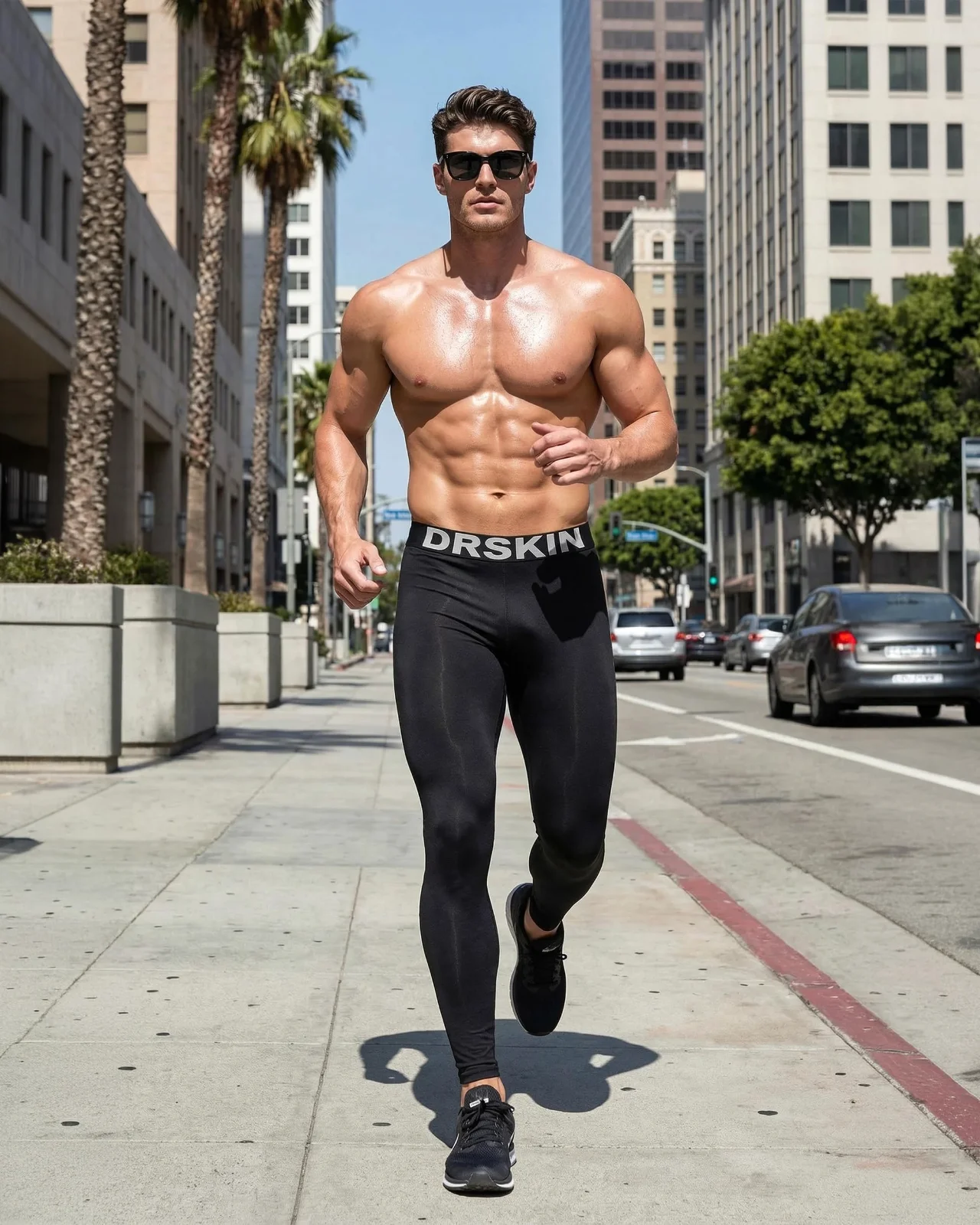
Nobody returns a base layer because it was the wrong colour. They return it because it felt wrong on the first wearing and they had no way of telling whether that feeling was the garment working or the garment being a size too small. Those two sensations are genuinely similar for about a minute, which is why this is worth writing down once.
Two numbers, taken once
Everything on this site is decided by one of two measurements. Below the belt it is the waist: the tights, the three-quarter tights, the compression shorts and the loose athletic shorts all read from it and from nothing else. Above the belt it is the chest: the long sleeves, the short sleeves, the tanks and the winter tops. There is no third number and no garment here that needs one.
Take the waist at the level you wear a trouser, tape flat against the skin, breathing out rather than holding it in. Take the chest at the fullest point with the tape level under the arms, over nothing or over a thin shirt. Write both down in inches. You will use them against the chart that opens from the buying button on every piece, and you will use them again next year, because those numbers move less often than the letters on a rail do.
What you should not do is read across from the shirts you buy on a high street. A shirt size is a collar measurement wearing a jacket over a hundred years of habit; a compression chest measurement is a tape against your ribs. The two agree by luck.
What a compression fit is supposed to feel like
Close, immediately, everywhere at once. A compression garment is knitted smaller than the part of the body it goes on, so the first minute of wearing a new pair is the tightest it will ever feel: the knit has not yet warmed, it has not yet taken your shape, and your brain is still reporting on it. Two minutes later you should have stopped noticing.
The useful test is movement rather than standing still. Squat all the way down in a new pair of tights and stand up again. Reach forward with both arms in a new long sleeve. Sit on the floor in a pair of compression shorts. If the garment moves with you and goes back where it was, the letter is right, however snug it felt in the changing room.
Three sensations that mean the letter is wrong
- A waistband that folds over when you sit down. This is the commonest one and it is not fixable by wearing it in. A band folds when the waist measurement underneath it is bigger than the band was cut for, and the next letter up is the answer.
- A sleeve that stops short of the wrist when you reach forward. On a long sleeve this is a chest measurement between two letters resolved in the wrong direction. Stretch does not give length back once the fabric is already taut across the shoulders.
- Numbness or pins and needles standing still. A compression garment holds; it should not restrict circulation. If a knee, a calf or a forearm goes numb while you are not moving, take the garment off and order the next letter.
What does not mean the letter is wrong: a red mark at the waistband after a session, a garment that is hard to pull on over a damp leg, or the fact that it looks smaller than your other clothes when it is lying flat. All three are normal for a compression cut and none of them predicts how it wears.
The rule, and the two places it reverses
On anything with the word compression on the card, a measurement that lands between two letters takes the larger. That covers the tights, the three-quarter tights, the compression shorts, the long-sleeve base layers and the sleeveless base layers, which is most of this site.
It reverses on two shelves. The short-sleeve training tees are cut to hang rather than hold, and a tee ordered a letter large behaves like a sail; there the smaller letter usually sits better. The 10-inch athletic shorts are the same argument on the bottom half: they are the loose outer layer, and their ten inches is an inseam rather than a fit, so the waist letter should be the one that matches your tape rather than the one above it.
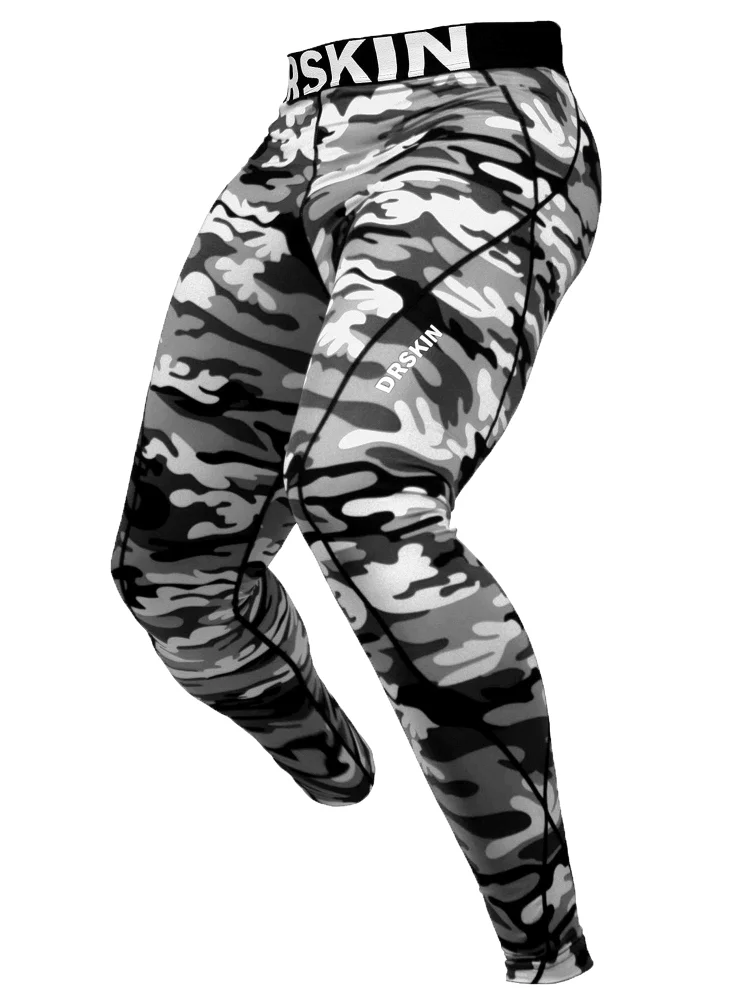
DRSKIN Compression Tights, camo grey
The full-length pair the rest of the size guidance is written against: S to 3XL, one cut, sold singly and in packs to five.
$14.99
Where each cut's run stops
The size run is not the same across the site, and assuming it is causes more wrong orders than the measuring does. The tights, both kinds of shorts, the long-sleeve base layers, the training tees and the fleece-lined winter pieces run to 3XL. The tank tops stop at 2XL. Every card prints the run for that particular cut, and that is the number to read rather than a range for the shop as a whole.
| Shelf | Measure | Between two letters |
|---|---|---|
| Compression tights | Waist | Take the larger |
| Three-quarter tights | Waist | Take the larger |
| Compression shorts | Waist | Take the larger |
| 10-inch athletic shorts | Waist | Take the one your tape says |
| Long-sleeve base layers | Chest, then arm length | Take the larger |
| Short-sleeve training tees | Chest | Take the smaller |
| Tank tops | Chest | Take the larger |
| Fleece-lined layers | Waist or chest | Take the larger |
One quirk worth knowing at the top of the run: across the large letters the extra goes mostly into girth rather than length. A 3XL tight is considerably wider around the thigh and the waist than a 2XL and only a little longer down the leg. If your problem is a long leg at a moderate waist, going up a letter will not solve it, and it is better to know that before the parcel arrives than after.
Buy one before you buy five
Most of this range is sold in packs, and the packs are cheaper per garment. That is exactly why a wrong letter hurts more in a pack: three garments to send back instead of one. Order a single of anything you have not worn before, wear it once, then buy the pack in the letter you now know. The few dollars that costs is less than the afternoon an exchange takes.
And if the piece you want does not come as a single, order the smallest pack in the range before the largest. The five-pack of tights is the cheapest pair on this site and it is the worst possible first purchase.
More of this sort of thing is in Field Notes, and everyone at DRSKIN keeps the whole range one click away on the front page.