Why DRSKIN base layers come three to a box
A base layer comes off wet and does not get a second wearing, which turns the question from "how many do I want" into "how many sessions are there between washes". The arithmetic, what a pack contains, and the one thing to read on a pack card before you order.

Multipacks look like a sales tactic and mostly they are. On this site they are something duller and more useful: an answer to a laundry problem that only exists for clothing worn against the skin.
The arithmetic
A base layer comes off the body wet. Not damp at the collar like a shirt after a warm office — wet through, because taking sweat off the skin is the job it was bought for. A wet garment does not get a second wearing, so the number you need is not the number you want to own, it is the number of sessions between one wash and the next.
Train twice a week and wash on Sundays: two garments, plus one for the week something goes wrong. Train three times: three. Train five times and wash midweek: three again. Almost everybody lands on three. That is the pack size on every shelf here and the one that outsells the singles.
The second and smaller reason is money. On every shelf on this site the pack costs less per garment than the single of the same thing, and the gap is usually around a third. That is a consequence of packing and shipping one parcel rather than three rather than a promotion, which is also why the cheapest per-garment prices in the whole catalogue sit on pack cards rather than on sale cards.
What is in the box
This is the one thing worth reading before you order, and it is on every pack card. A pack arrives in the colours the card names, one of each. A three-pack listed as black, grey and navy is one black, one grey and one navy; it is not three of whichever you would have picked. Where a pack is single-colour, the card says that instead, and there are several of those on the tights shelf for people who only ever wear black.
Every garment in a pack is the same size letter, and the letter is the one you pick at the till. If you need two different sizes, that is two orders. It sounds obvious written down and it is the second commonest reason a pack goes back.
A few of the pack cards on this site are named with the brand's own codes rather than colour words: a pack number in place of a description. Where the photographs showed the colours plainly, we read them off and printed them. Where they did not, the card shows the code exactly as it appears at the till, because a guessed colour is worse than an honest code.
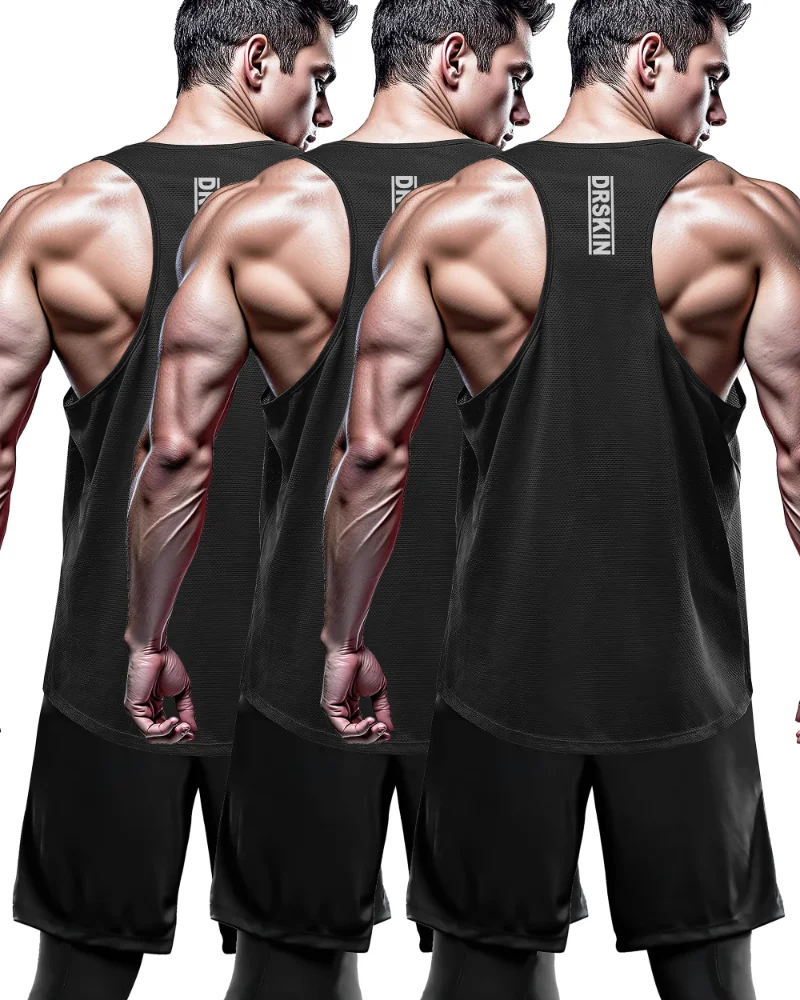
DRSKIN Mesh Muscle Tank, 3-pack
A three-pack on the tank shelf: the same cut three times, and the shelf where a pack makes the most sense.
$24.89
Which shelves the packs earn their place on
| Shelf | Why a pack helps | Pack sizes here |
|---|---|---|
| Tank tops | The layer that soaks through first; comes off wet every session | Two, three and four |
| Compression tights | Worn under everything, so worn most often | Two, three, four and five |
| Compression shorts | Same, and they go through the wash twice a week | Two and three |
| Long-sleeve base layers | One per cold morning, and cold mornings come in runs | Three and four |
| Fleece-lined layers | A short season, so the whole season is bought at once | Two and three |
| Three-quarter tights | Sold singly only; a narrow shelf | Singles |
The one place a pack is the wrong first order is any garment you have not worn before. The packs are cheaper per garment precisely because you are committing to three of them, and three in the wrong letter is three times the annoyance. Buy the single, wear it once, then buy the pack in the letter you now know.
Looking after three of the same thing
Rotating three garments rather than washing one repeatedly is also what makes them last. Elastane ages with heat and with time under tension; a garment that gets a day to relax between wearings keeps its recovery longer than the same garment worn and washed every day. That is the practical argument for a pack over a single, and it is worth more than the third you save on the price.
The care instruction on the label is the document that governs, and on these knits it is short: cold water, no bleach where the label says none, and out of the dryer if you can. Under the Care Labeling Rule that instruction has to be backed by evidence and has to stay legible for the life of the garment, so it is worth reading once rather than assuming.
More of this sort of thing is in Field Notes, and the people at DRSKIN keeps the whole range one click away on the front page.